Hey, it’s your coach Jordan Briones.
I want to be real with you for a second.
A lot of players come to me frustrated. They’re putting in the time. They’re showing up to play. But their game isn’t improving the way they expect it to. And when we dig into what’s actually happening on the court, it almost always comes back to the same handful of habits.
Not big, dramatic mistakes. Just small, ingrained patterns that quietly drain their game every single time they play.
The good news? These are completely fixable. And once you see them, you can’t unsee them.
Here are four amateur habits that might be hurting your game right now — and exactly what to do instead.
Four Habits That Could Be Holding Back Your Game
Habit #1: Attacking the Ball Right Into Your Opponent’s Chest
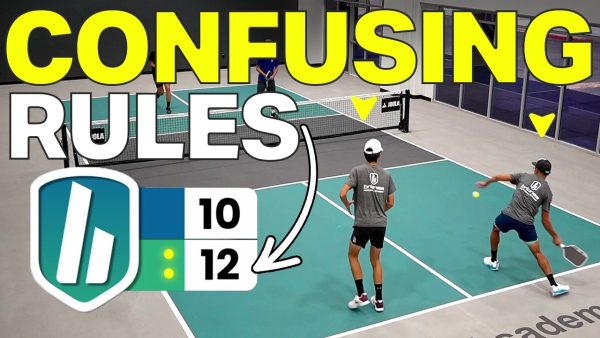
This one feels like a smart play. You see a ball you can attack, you swing, and you aim right at the person in front of you.
Against beginners, it sometimes works. But the moment you’re playing someone with a solid counter game, that ball is coming right back at your feet — fast — and now you’re the one in trouble.
Here’s the problem. Attacking into the chest gives your opponent the most comfortable counter position possible. The ball is exactly where they want it. They don’t have to reach, adjust, or think. They just push it back with pace, and you’ve handed them the advantage.
The fix starts with shot selection. If the ball you’re looking at is really low — close to your knees or below — don’t attack it. Dink it. A low ball is not a good attacking ball, no matter how tempting it looks.
One of the most important amateur pickleball mistakes to fix is attacking without a target in mind. If you do have a ball worth attacking, aim somewhere uncomfortable. The chicken wing area just off their shoulder. Out wide to their backhand. A spot that forces them to reach, adjust, or stretch. That’s what creates weak counters and short balls you can actually put away.
Attack with a purpose — not just with pace.
Habit #2: Panicking and Bailing Out Under Pressure
This one is really common and really honest. We’ve all been here.
You get pushed around a little — maybe a dink lands at your feet, or you get moved side to side — and suddenly you go into survival mode. There’s no plan anymore. You’re just slapping the ball back across the net and hoping for the best.
The problem isn’t the pressure. The pressure is part of the game. The problem is losing your intention under that pressure.
When you bail out and shove the ball anywhere, you’re essentially handing your opponent a gift. They don’t even have to do anything great. They just wait for your panicked ball and apply more offense.
Here’s what to do instead.
The moment you feel pressure — stop. Take a breath inside your head. Split step. And hit a dink. Not a smash. Not a roll. A controlled, intentional dink that resets the rally and buys you time to regroup.
Calm resets the point. Panic extends it in your opponent’s favor.
The players who seem unshakable aren’t superhuman. They’ve just trained themselves to slow down when things get fast.
Habit #3: Popping Up Your Dinks — and the 3S Method to Fix It
This is the most common one I see on the court. By a wide margin.
Pop-up dinks are essentially free offense for your opponent. Whether it happens off the bounce or on a volley dink, the result is the same — the ball sits up, your opponent unloads on it, and you’re scrambling.
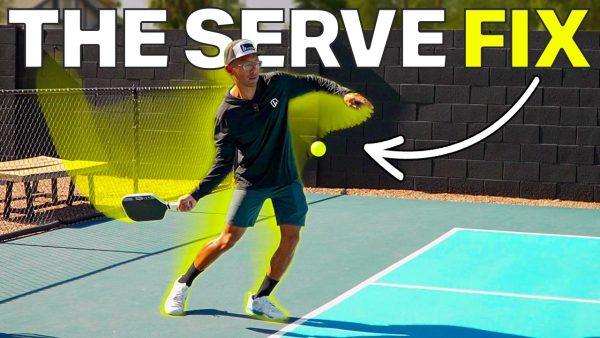
The root cause for most players is a lack of depth control. The dink is going too far, floating past the non-volley zone, and landing in a spot your opponent can attack comfortably.
To fix this, I use what I call the 3S Method. Three things you can control that directly affect how deep your dink travels.
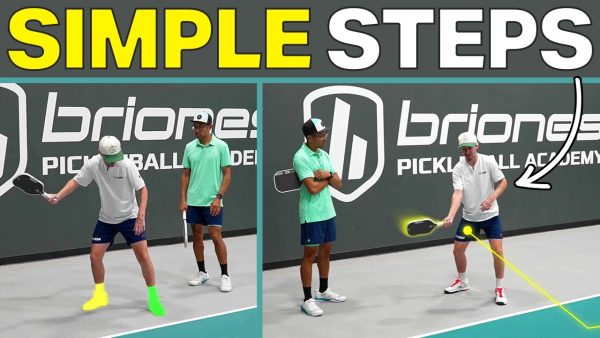
Space. If the ball is bouncing up through your feet and you can’t take it out of the air cleanly, you have to move. Drop step back with one foot or shuffle off the line. Create the space you need to make a controlled swing. Without space, you’re half-volleying and guessing.
Swing Speed. The speed of your swing controls how far that ball travels. This is where a lot of players get tripped up. They create the space — but then they swing fast. And a fast swing on a dink carries the ball way past the kitchen. Slow your swing down. Intentionally. It should almost feel like you’re barely doing anything. That’s the right feeling.
Swing Size. A long, high follow-through pushes the ball deeper. A short, compact swing keeps it in. Watch your backswing — keep it minimal — and just lift toward your target. The smaller the swing, the more control you have over where that ball actually lands.
Put all three together. Create space. Slow the swing. Keep it short. And suddenly your dinks are landing where you want them instead of begging to be attacked.
Habit #4: Letting Opponents Walk to the Kitchen for Free
When your opponent is in transition — making their way up from the baseline toward the kitchen line — that is your moment. That is when you apply pressure.
But a lot of players let that moment pass. They wait. They short-hop the ball. They let their opponents reach the line comfortable and settled, and then the rally resets on even terms.
Here’s what you should be looking to do instead.
First option — take the ball out of the air. If you can volley it before it bounces, do it. This takes time away from your opponent while they’re still moving. They can’t settle. They can’t prepare. They’re reacting on the run, and that’s exactly where you want them.
Second option — if you can’t take it out of the air, let the ball rise to its highest point off the bounce — the apex — and take it there. You get a clean, controlled contact point and you can drive it low toward your opponent’s feet as they’re coming in.
What you want to avoid at all costs is the short hop — that awkward half-volley where the ball is still rising off the ground and your paddle is digging underneath it. From that position, you have no topspin, no power, and no control. Your opponent sees your paddle drop and they know they’ve got a free pass to the kitchen.
Make them earn the kitchen line. Keep the ball at their feet. Use the out-of-the-air or apex contact whenever possible.
Takeaways
Here’s the thing about all four of these.
None of them require elite athleticism. None of them need a better paddle or a fancier swing. They’re all decisions — shot selection, composure, swing discipline, timing.
And decisions can be trained.
Clean up your attack targets. Stay calm under pressure. Use the 3S method on your dinks. Apply pressure in transition.
Do those four things consistently, and you’re going to start noticing a real difference in your game. The points you used to lose will start flipping. The players who used to push you around will suddenly find the game a lot harder.
One habit at a time. That’s all it takes.
See you on the courts,
Coach Jordan Briones