Hey there, it’s your coach Jordan Briones.
There are certain attacks that just work. Not sometimes. Not against weaker players. They work consistently at every level because they’re built around sound geometry, opponent tendencies, and smart positioning.
I want to walk you through three of them today. These are shots the best players in the game use regularly, and once you understand the why behind each one, you can start building them into your game right away.
3 Advanced Pickleball Attacks That Force Predictable Counters
1. Use the Cross-Body Attack to Jam Your Opponent’s Dominant Side
When you’re playing the right side of the court and you get a ball at net height or slightly above on your forehand, this is your moment.
The move is to swing that ball across your body, targeting the outside of your opponent’s right hip—their chicken wing zone. The reason this attack is so effective against right-handed players is that they’re already protecting their body and their line at the same time. By attacking their dominant side at that tight angle, you’re forcing a late contact point. Most of the time they get stuck in that chicken wing position and the return comes back toward the middle or slightly to your backhand side. Understanding pickleball attacking strategies for advanced players helps you recognize exactly when and how to apply these cross-body shots to create predictable returns.
That’s exactly where you want to be set up. After you fire that cross-body attack, get your two-handed backhand or a compact one-handed punch volley ready on that side because that’s where the counter is coming.
Now here’s the key thing about this attack. It works so well that opponents start sitting on it. They start cheating toward their forehand waiting for it. So you need a second option off the exact same setup, and that’s an off-pace attack down the line to their backhand. Same ball, same preparation, but now you’re going the other way and making them reach for a backhand volley instead. Mix these two and they genuinely cannot read you.
2. Lean In and Flick Your Backhand Down the Line From the Left Side
This one is particularly deadly and when it’s executed well, opponents almost never see it coming.
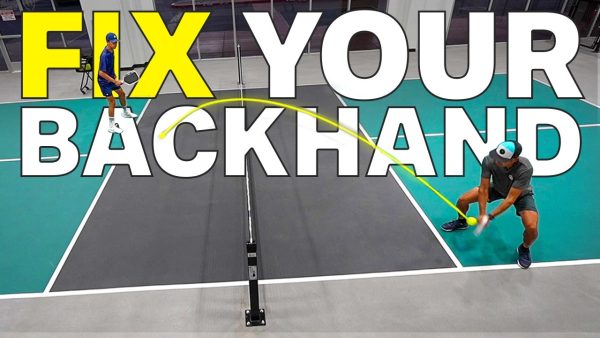
When you’re on the left side of the court and you get a ball at or slightly below net level, especially a crosscourt dink coming across your body, lean in and roll or flick that ball straight down the line. You’re attacking toward the right-handed player’s dominant hip again, their chicken wing side, and because of where you’re standing the angle is nearly impossible to read.
The most important thing with this shot is location over power. You’re not trying to hurt the ball. You’re aiming about a foot or two outside their right hip with just enough pace to make it uncomfortable. It’s a placement shot more than a power shot.
When opponents start getting better at defending this, they’ll begin sliding toward their dominant side to cover it. That’s actually your advantage because now you have another option. From the same exact setup, instead of going down the line you redirect toward their left side as they’re moving right. The setup looks identical. The ball goes somewhere completely different. That combination will keep even experienced players guessing.
3. Roll an Inside-Out Topspin Dink to Pin Your Opponent in the Corner
Pickleball attacking strategies for advanced players are on full display here — this is one of the most refined weapons you’ll see used by elite players on the left side of the court, and Ben Johns uses it as well as anyone in the game right now.
What you’re looking for is a weaker, softer dink landing in the middle of the kitchen. When you see it, drop your paddle tip down and apply topspin while redirecting the ball toward the crosscourt player’s backhand corner. You’re essentially hitting the ball inside out, pulling it away from where it naturally wants to go.
When you land this shot well, your opponent gets pinned deep in that corner with very limited options. Most of the time, they can only dink back to the middle or push it straight to their partner. They can’t really attack from there. Learning pickleball attacking strategies for advanced players is all about creating these situations where your opponent is forced into limited, predictable responses.
Final Thoughts
And here’s where it gets even more useful. Because your setup for this shot looks identical to a middle speed up, you can mix those two together. Same stance, same paddle preparation, and then you either roll it topspin to the backhand corner or you fire it low and quick down the middle. Opponents have to make a decision before they know which one is coming, and that’s exactly the position you want them in.
These three attacks are not random. They’re connected by the same idea: put the ball where your opponent struggles most, set up for their counter before it comes, and keep a second option ready off the same look so they can never completely solve you.
Work on one at a time. Get comfortable with the primary version first and then add the secondary option once the first feels automatic. That’s how you start playing the kind of pickleball that actually makes opponents feel stuck.
See you on the courts,
Coach Jordan Briones