Hey there, it’s your coach Jordan Briones.
One of the most common issues I see when coaching players who are working on their topspin backhand dink is not the technique itself. It’s the footwork. And more specifically, it’s knowing when to be aggressive and when to back off.
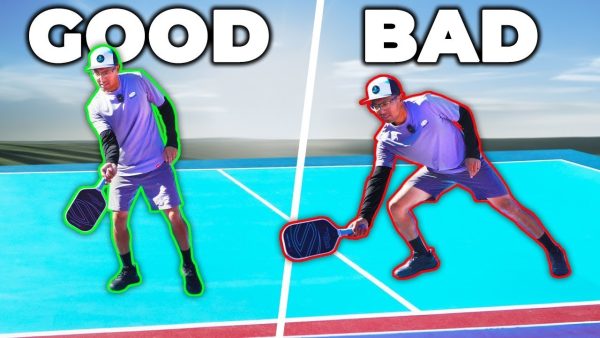
I was working with a player recently who had solid mechanics. He could roll the ball with topspin. He understood the concept of attacking. But every time he hit a good one and moved in to find an opportunity to flick, his opponent would hit a good one back and he wasn’t moving. He was just reaching instead of repositioning his feet.
That’s the difference between good and great at higher levels. It’s not just about having the shot. It’s about having the footwork to be in the right position to execute it consistently.
How to Master Your Topspin Backhand Dink With Smarter Decisions
Lean In With Purpose — Not Emotion
The first thing we need to talk about is shot quality and knowing when to lean in versus when to stay neutral.
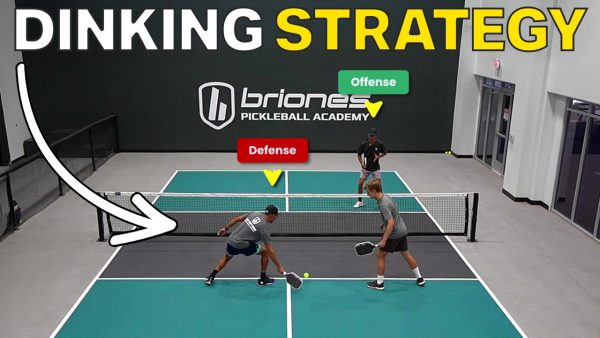
You should be looking at your opponent’s posture and where their contact point is. Those are the two main things that tell you whether you can be aggressive or not.
Posture refers to their balance. Contact point refers to how far away the ball is from their body.
If your opponent is stretching or reaching and their contact is far from their body, you should be leaning in all the time. That’s when you can take the ball out of the air and attack.
Now if they’re setting up for another roll and they’re very well balanced, you have two options. You can hit another topspin roll or you can try to take it out of the air. But you need to be making that decision based on what you’re seeing, not just reacting blindly.
I really want you to think about being aggressive, but also leaning in on the right shots. Not every ball deserves aggression. Some balls require patience and repositioning.
Make Your Topspin Dink Land With Intent
Let’s talk about what makes a topspin dink effective in the first place.
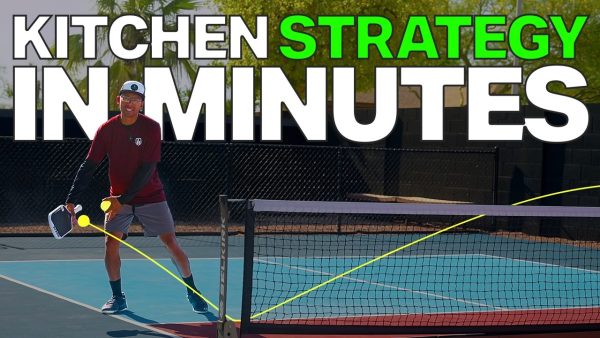
When you’re rolling crosscourt or down the line, where should the ball be landing? A lot of players think they should be aiming deep toward the baseline. But that’s not correct.
You should be aiming for the ball to land somewhere near the kitchen line. Not right on top of it, but a little bit past it. If your ball is landing too short, your opponent can take it out of the air and attack you.
In the beginning, a lot of players hit balls that sail long. They’re swinging too fast and trying to create too much topspin. What you need to do is adjust two things.
First, your swing speed needs to be slower, especially when you don’t have a lot of margin like when you’re rolling up the line. When you’re going crosscourt, you can swing a little bit faster because you have more court to work with. But when you’re going down the line, you need to slow it down.
Second, your paddle path needs to be more vertical. You can’t be swinging through the ball like you’re trying to drive it. You’ve got to be coming straight up on it to create that rotation and arc.
Know When to Reset Instead of Forcing the Roll
You can’t hit every ball with topspin aggression. There are specific situations where you need to reset instead of attack.
The first situation is when you’re out of position. If you’re stretched or reaching or your footwork didn’t get there in time, you need to reset. Don’t force a low percentage shot just because you want to be aggressive.
Balance is going to be number one. You have to check your balance before you decide to roll. If your weight is falling back or you’re leaning to your left, don’t go crosscourt. Ever. You’re going to miss or you’re going to float the ball and give your opponent an easy attack.
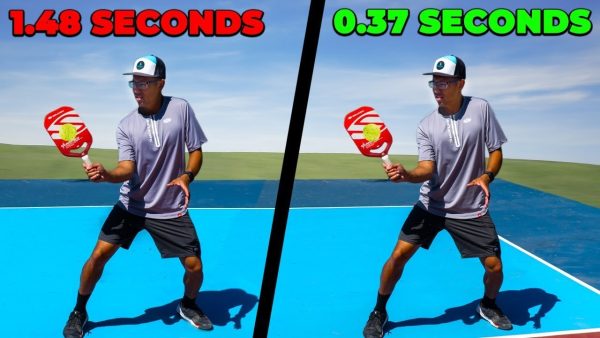
The second situation is when you don’t have space and time. If you don’t get your footwork in position fast enough, then you need to do some sort of lift or reset to buy yourself time.
If you feel like you need a reset and you’re in a bad position, go middle or slightly down the line. But don’t go directly down the line because that opens up the Ernie opportunity for your opponent.
Let Your Contact Point Guide Your Shot Selection
Here’s a simple rule that will help you make better decisions on when to go crosscourt versus when to go middle or down the line.
If the ball is outside your left knee, don’t go crosscourt. Anything outside your left knee should be going down the line or middle.
Now if you can get the ball inside your left knee, anywhere in that zone closer to your body, your position is really good. That’s when you can pull it crosscourt with confidence.
This is a little indicator that will help you in real time. You don’t need to overthink it. Just check where the ball is in relation to your left knee and make the decision based on that.
Apply Steady Pressure With Smart Shot Quality
At higher levels, every ball doesn’t have to be crazy perfect. It just has to be enough pressure.
When you set up in an aggressive position, your opponent doesn’t even know what you’re going to do. They still have to prep for a counter or a speed up. But if you roll it with good depth and placement, it makes it that much harder for them to do anything offensive.
Your shots just have to be that much more precise. If you hit your targets consistently, your opponent can’t attack them at all. But you have to be smarter about shot selection.
Remember that little rule about inside foot and outside knee. And understand that not every ball needs to be perfect. Consistency and good decisions will win you more points than trying to hit the perfect roll every single time.
Here’s the pattern that works at higher levels.
You roll crosscourt to the inside foot or out wide. Your opponent sends back a dead dink because they’re off balance or stretched. Now you attack that dead dink with another aggressive roll or a speed up.
If that bounce is high and it’s short, you’ve got to be rolling again. If it’s low, you get low and slice it. But if it’s sitting up there waiting to be attacked, you attack it.
That’s the cycle. You create pressure with your roll. They give you a weak response. You attack the weak response and create more pressure. Eventually something breaks down and you finish the point.
Let’s Be Real
The difference between good players and great players at higher levels comes down to two things.
Footwork that gets you in position early so you can execute with balance. And shot quality that puts your opponent in bad spots consistently.
You don’t need to be perfect. You just need to be precise enough and smart enough to make the right decisions based on what you’re seeing.
Check your balance. Check your contact point. Know when to attack and when to reset. And keep your targets tight.
That’s how you separate yourself from the competition.
See you on the courts,
Coach Jordan Briones