Hey there, it’s your coach Jordan Briones.
No matter what level you are at right now, there are three shots that show up in almost every single rally. Your return, your third shot drop, and your fourth shot. And if any one of those three is breaking down, it is going to cost you points over and over again.
The good news is that most of the problems I see with these shots are fixable. Not with a total overhaul of your game, but with a few really specific adjustments that make an immediate difference. Let me walk you through all of it.
Why Your Return Is Setting You Up to Lose the Point Before It Even Starts
The first thing I notice when I watch players at almost every level is where they are standing when they set up for the return. Most players are standing too close to the baseline, and it is quietly hurting them in a few different ways.
When you are right up on the line, a deep serve forces you to step back as you hit. Your weight is moving away from the net and the ball ends up short. You also have zero time to build any forward momentum, which means even if you hit a decent return, you are sprinting to the kitchen from a standing start and you will almost never get there in time.
Give yourself room behind the baseline. That extra space buys you time, lets the ball come to you, and allows you to step into the shot while your momentum is already moving forward toward the net.
The second problem on the return is late preparation. The serve is in the air and the player still has not decided forehand or backhand. By the time they react, the contact point is behind them and everything goes wrong from there.
The fix is the unit turn. The moment you read which side the serve is going to, your shoulders rotate immediately. Not your arm, not your paddle. Your shoulders. That early turn is what gets your whole body in position and gives you a clean contact point out in front.
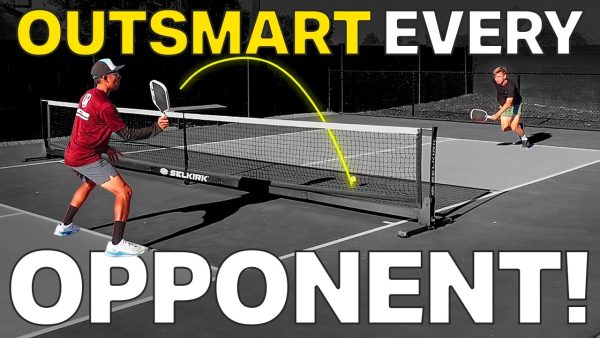
The third thing I want you to think about on the return is your target. Most recreational players go for too much. They aim at corners, they flirt with sidelines, and they make unforced errors trying to hit a hero return. Watch professional pickleball and you will see that the vast majority of returns go deep and down the middle. That is not boring. That is smart. Consistent returns down the middle keep you in the point and get you to the net.
And remember this. The real goal of the return is not just to get the ball deep. It is to set yourself up in a strong position for the fourth shot. If you need more time to get to the line, put a little loft on the ball. Keep it in the air longer. Buy yourself the time you need to arrive at the non-volley zone ready to play offense, not defense.
The Two Reasons Your Third Shot Drop Keeps Getting Crushed
When the drop is not working, it almost always comes down to one of two things. Either the player is not creating enough space, or they are swinging way too fast.
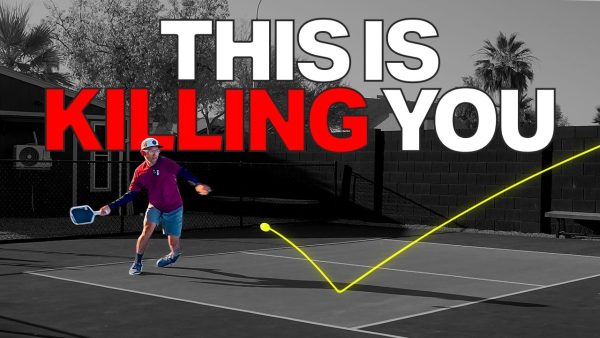
On the space issue, the problem is that players are getting jammed. A deep return comes in, they do not move their feet back, and now they are trying to hit a controlled drop while the ball is right on top of them. That rushed contact is what sends the ball flying high and short, giving the other team an easy put away.
When you see that return coming in deep, move your feet back. Create the space you need to let the ball get to a comfortable height, ideally just past the top of the bounce, and then swing through it with control. That adjustment alone will make your drops immediately more consistent.
The swing speed problem is just as common. Players hear that they need to swing through the ball on the drop and they take that to mean swing hard. But think about where the target is. You are trying to land the ball in the non-volley zone, which is not far at all. A fast swing on a short target is going to send the ball too deep or too high almost every time.
Slow to medium swing speed is what you are going for on the drop. Enough to brush the ball and get it over the net with some shape, but controlled enough that you can manage the depth. The faster your swing, the harder it becomes to dial in exactly where that ball lands.
One more thing on the mental side of the third shot. Give yourself a margin for error. You do not need to hit a perfect drop every single time. Trying to skim the net with zero clearance is how you make errors. The pros rarely miss their thirds because they are not going for perfect. They are going for consistent. They make their opponents play.
Also, make your decision early. Drop or drive. Pick it before the ball even gets to you and then commit fully. Changing your mind mid-swing is one of the most common causes of errors on the third shot. Pick your shot, trust it, and execute.
You Made It to the Net, Now Here Is How to Stop Giving the Point Back
After the return, a lot of players do all the hard work of getting to the net and then immediately give the point away with a poor fourth shot. Here is what I see most often.
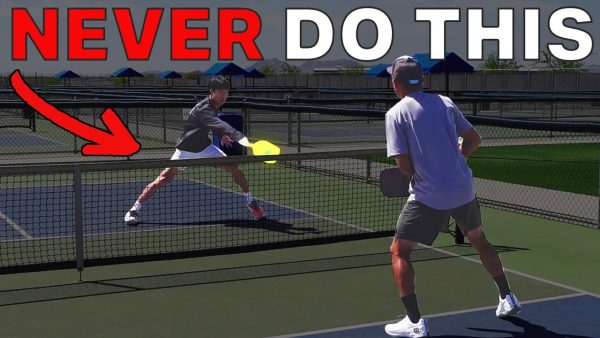
First, players are still moving when they hit the ball. You have to stop. After your return, as your opponent is making contact, you need to be in a split step so that you are stable and balanced. Hitting a volley while you are mid-stride is one of the surest ways to pop the ball up or push it wide.
Second, too many players are passive on the fourth. They see the ball coming back and they just push it softly out in front of them, giving their opponent a clean and easy third to drive or drop. What you want to do instead is be aggressive about depth. Your job on the fourth is to pin your opponent back, not to let them walk in comfortably. Every ball you hit should be carrying the message that they do not get a free entry to the kitchen.
Third, watch the direction of your swing on volleys. A very common mistake is swinging downward through contact. When you do that against hard drives, the ball goes straight into the net. What you want is to push forward and out, not down. Keep your paddle face slightly open and push through toward your target. That forward swing path is what keeps the ball deep and clears the net consistently.
And on the flip side, do not over-swing. Being aggressive does not mean trying to end the point on the fourth shot. Keep your swings compact and controlled. Your goal is sustained pressure, not a winner. The more consistent your fourth is, the more your opponents are forced to keep dealing with pressure from a worse position.
On the decision making side, your choice of shot on the fourth depends on what is coming at you. If your opponent is driving hard, shorten your swing and use a punch volley. Keep it simple and keep it deep. If they are dropping, now you have time. Step into it, drop your paddle, and look to apply topspin. When the ball is slower and coming in at a good height, that is your opportunity to be the aggressor.
Final Thoughts
One thing I will say on creating space at the net. If you cannot take the ball out of the air, do not just stand there and take it off the half volley. Step back, give yourself room, let the ball rise to a height where you can actually swing through it with intention. Taking a half volley from a jammed position with no options is giving the point away. Creating space and then attacking from a better contact point is how you stay on offense.
These three shots connect directly to each other. A solid return gets you to the net in time. A controlled drop forces your opponent to hit up. A smart fourth shot keeps the pressure on and puts you in position to win the point.
Work on each one separately. Be intentional about it. Small fixes in the right places will change how your game feels very quickly.
See you on the courts,
Coach Jordan Briones